

| Artikelnummer:: | 065 |
During World War II, transport aircraft played a very important role in delivering cargo and troops directly to the theater of operations. The vast majority of them could not take on board oversized cargo, due to the limited dimensions of the side hatches through which equipment was loaded and unloaded, although they had large cargo compartments.
In 1947, Chase Aircraft offered the military a new development, the XC-123. The main conceptual innovation in this design was a large loading ramp in the rear of the fuselage, which allowed the loading of oversized cargo quickly and without problems.The Air Force saw the potential of this machine, and in due course the design documentation was transferred to the Fairchild company, which had supplied the army with light transport aircraft during the war. Fairchild soon received an order from the Air Force for 302 aircraft, which were designated the C-123B. The first production machine flew in September 1954.
The aircraft entered service in mid-1955, officially named “Provider”. In addition to the Air Force, the Coast Guard became interested in the aircraft, and they received the newly designated HC-123B. A murky section of the biography of the C-123B relates to its participation in the activities of the airline Air America, which belonged to the CIA and carried out secret missions in Southeast Asia. As part of co-operation with friendly regimes, C-123Bs were delivered to the air forces of Thailand, South Vietnam, Laos, Cambodia, South Korea, Taiwan, Venezuela, and Saudi Arabia. The aircraft's service in the Vietnam War became an infamous, but perhaps also tragic, chapter in its history.
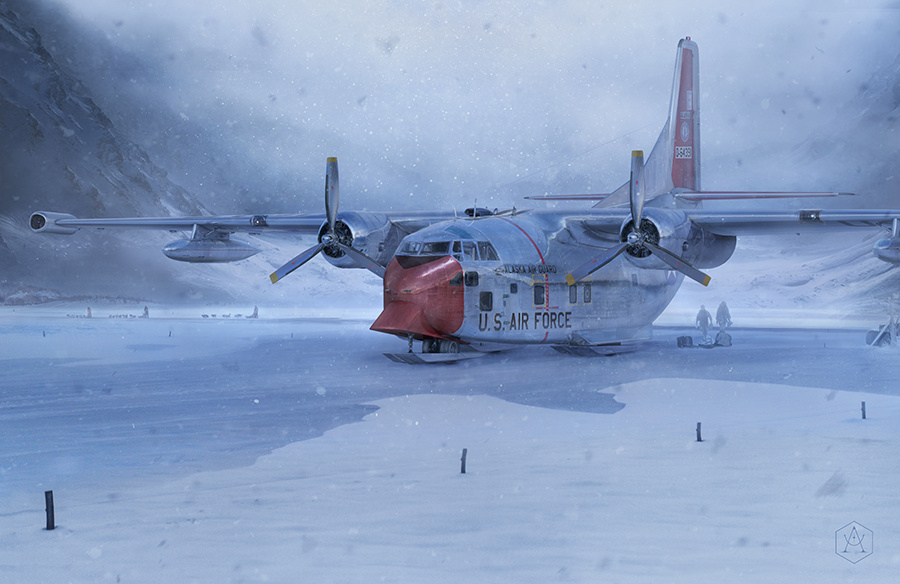
The Federal Aviation Administration, which controlled air transportation in remote areas of the country, such as Alaska, also received the C-123B, as the aircraft performed very well in extreme operating conditions. Additional Fairchild J44 jet engines were installed on the wingtips to improve takeoff with heavy loads for use in the Arctic conditions of Alaska. Ski landing gear allowed landing on snow or ice. These Fairchild C-123J Provider aircraft became a key rescue tool during the 1964 Alaska earthquake due to their unique ability to operate in conditions of complete loss of infrastructure. Immediately after the earthquake, when the tower in Anchorage collapsed, C-123J aircraft offered the only means of air traffic control. Provider crews used on-board radios as mobile communication hubs with the outside world, directing other rescue aircraft, preventing collisions and assisting landings on damaged runways.
The aircraft from the 144th Squadron of the Alaska National Guard flew 77 sorties in the first week alone as part of the massive Helping Hand rescue operation. They transported more than 60 tons of cargo and hundreds of passengers. With their ability to take off from short and damaged runways, the C-123Js were the first to deliver fuel and medical supplies to the tsunami-stricken cities of Valdez, Seward, and Kodiak. Providers became the first aircraft to land in Valdez after the disaster, delivering those critically needed supplies. A group of 17 C-123 aircraft began mass deliveries of food and equipment to the cities of Seward and Kodiak, 12 hours after the earthquake. Due to their design, the aircraft performed tasks that were not achievable with other equipment. Together with other aircraft, Providers participated in the transfer of oversize Bailey Bridge components to restore transport links to the Kenai Peninsula.
Since the disaster occurred on Good Friday, Guardsmen on C-123Js organized a collection of gifts from local merchants and delivered Easter baskets of candy to children in the devastated villages to support morale. During one rescue mission, a Fairchild C-123J crashed in Valdez in a snowstorm. Adjutant General Thomas Carroll and three other crew members died in the crash. The C-123J modification was a specialized version - a total of 10 units were converted. No aircraft of this specific J modification is currently flying.
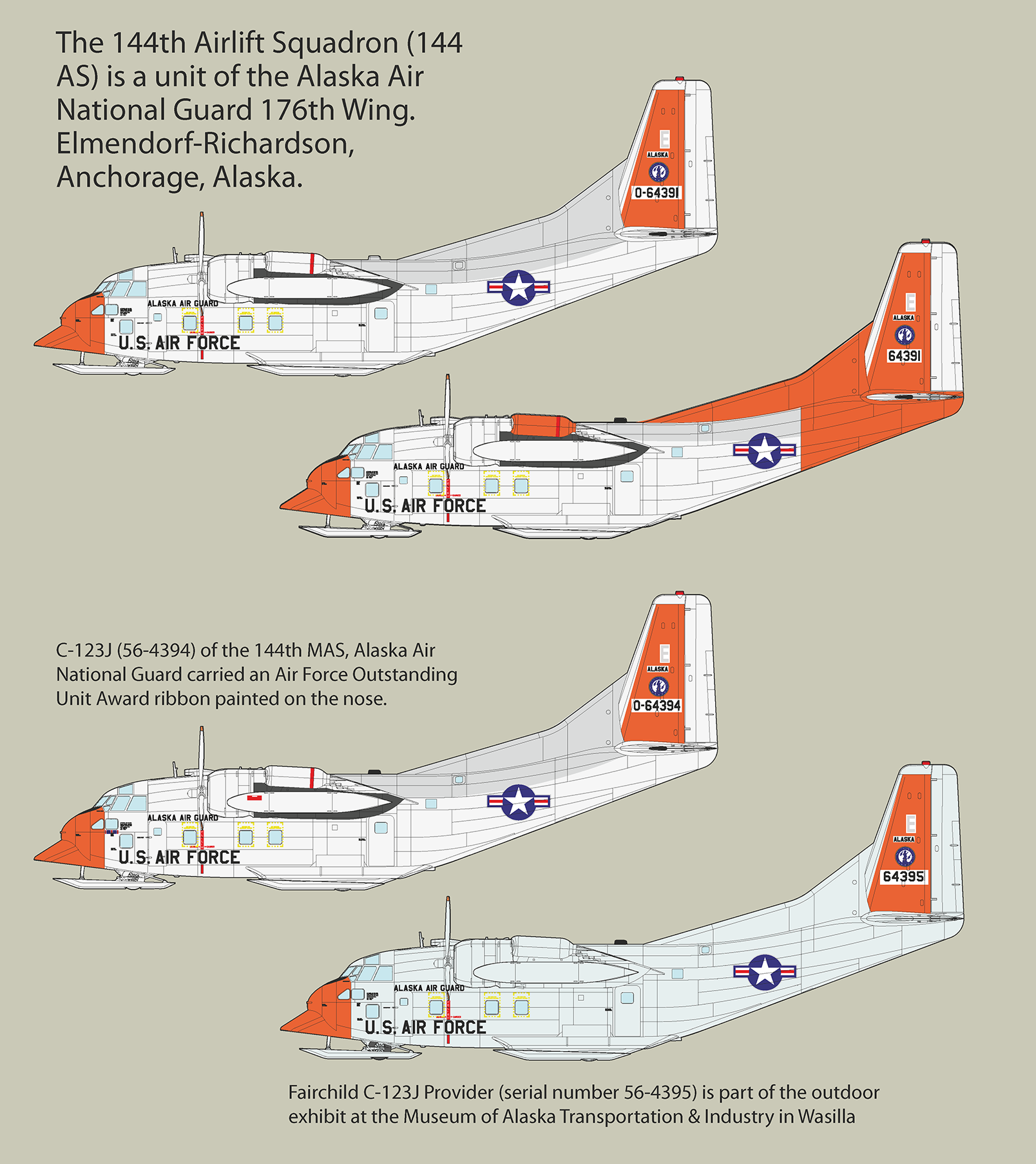
Several examples of this rare modification are preserved in museums, mainly in the USA (as they were used in the Arctic regions of Alaska). The most notable locations where you can see the C-123J: Museum of Alaska Transportation & Industry (Wasilla, Alaska, USA): This museum displays one of the Arctic C-123J aircraft (tail number 56-4395). It was previously stationed at Kulis Air National Guard Base.Joint Base Elmendorf-Richardson (Anchorage, Alaska, USA): Another aircraft from this series is on static display at the Air Force base.
Suchen Sie die Bestellung, die Sie widerrufen möchten
Geben Sie Ihre E-Mail-Adresse und Ihre Bestellnummer ein.
Prüfen Sie Ihren Posteingang
Wenn Ihre Angaben mit einer Bestellung übereinstimmen, erhalten Sie eine E-Mail mit einem Link, über den Sie diese betrachten und verwalten können.
