

| Artikelnummer:: | 5005 |
| Menge: | 1 |
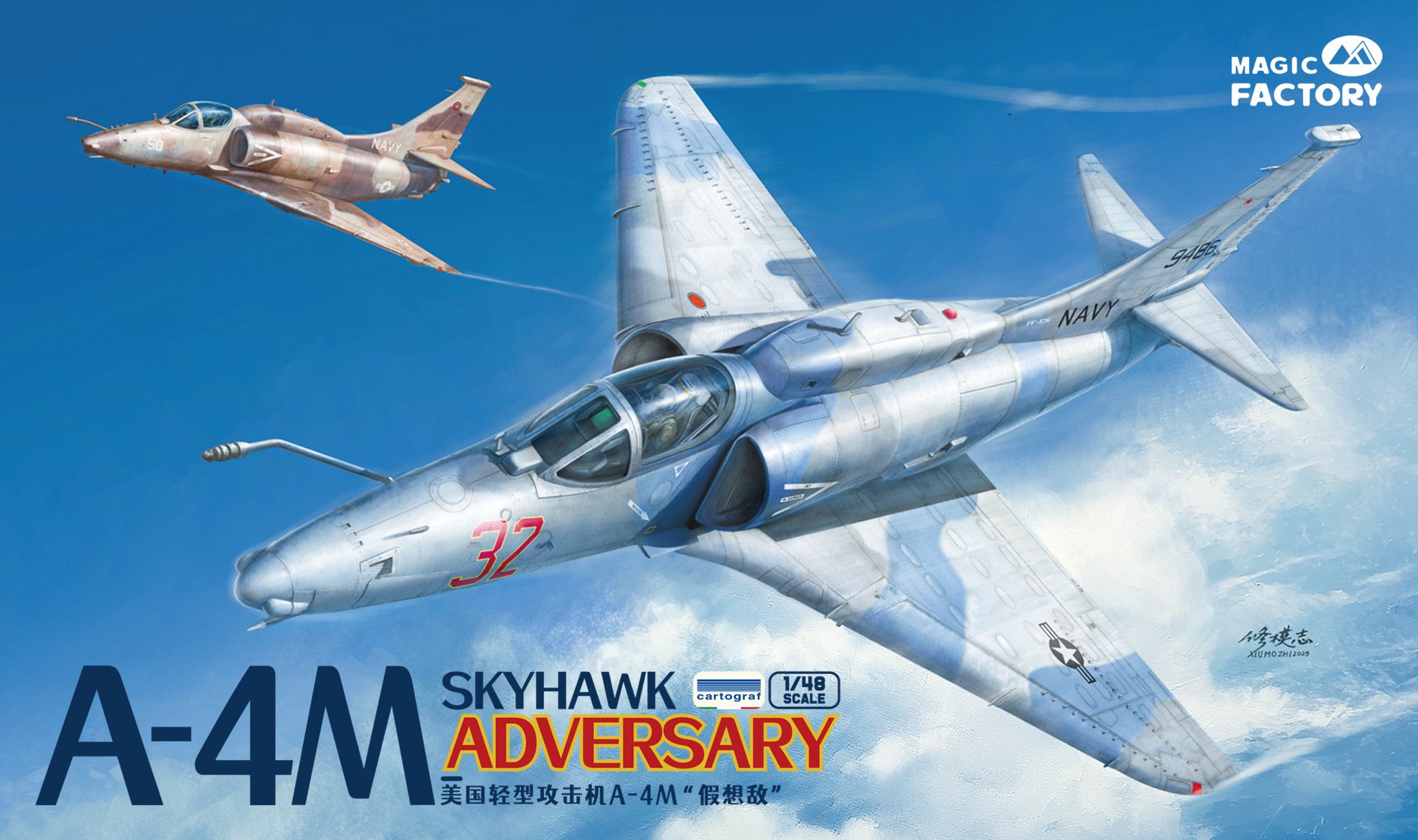
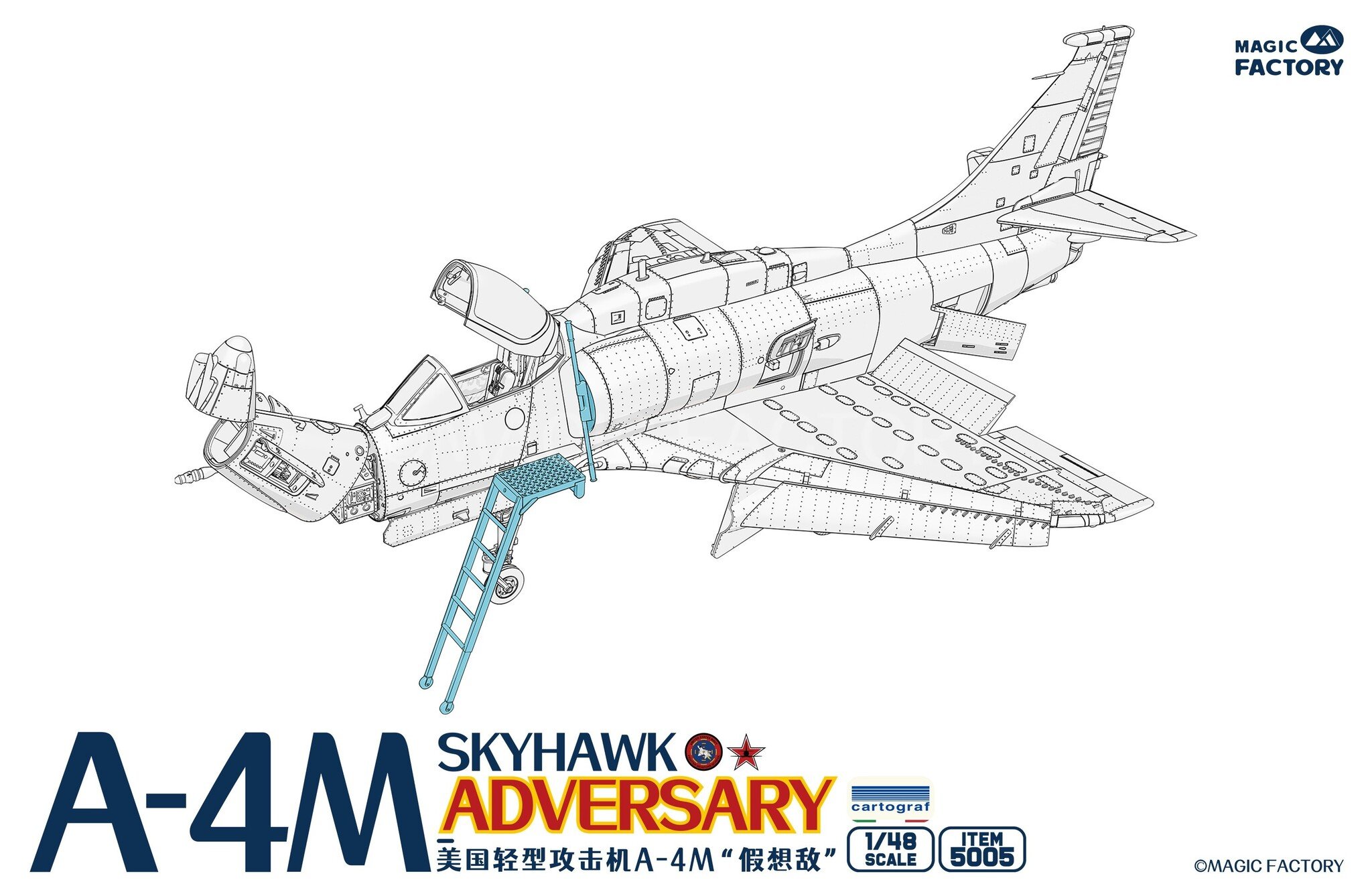
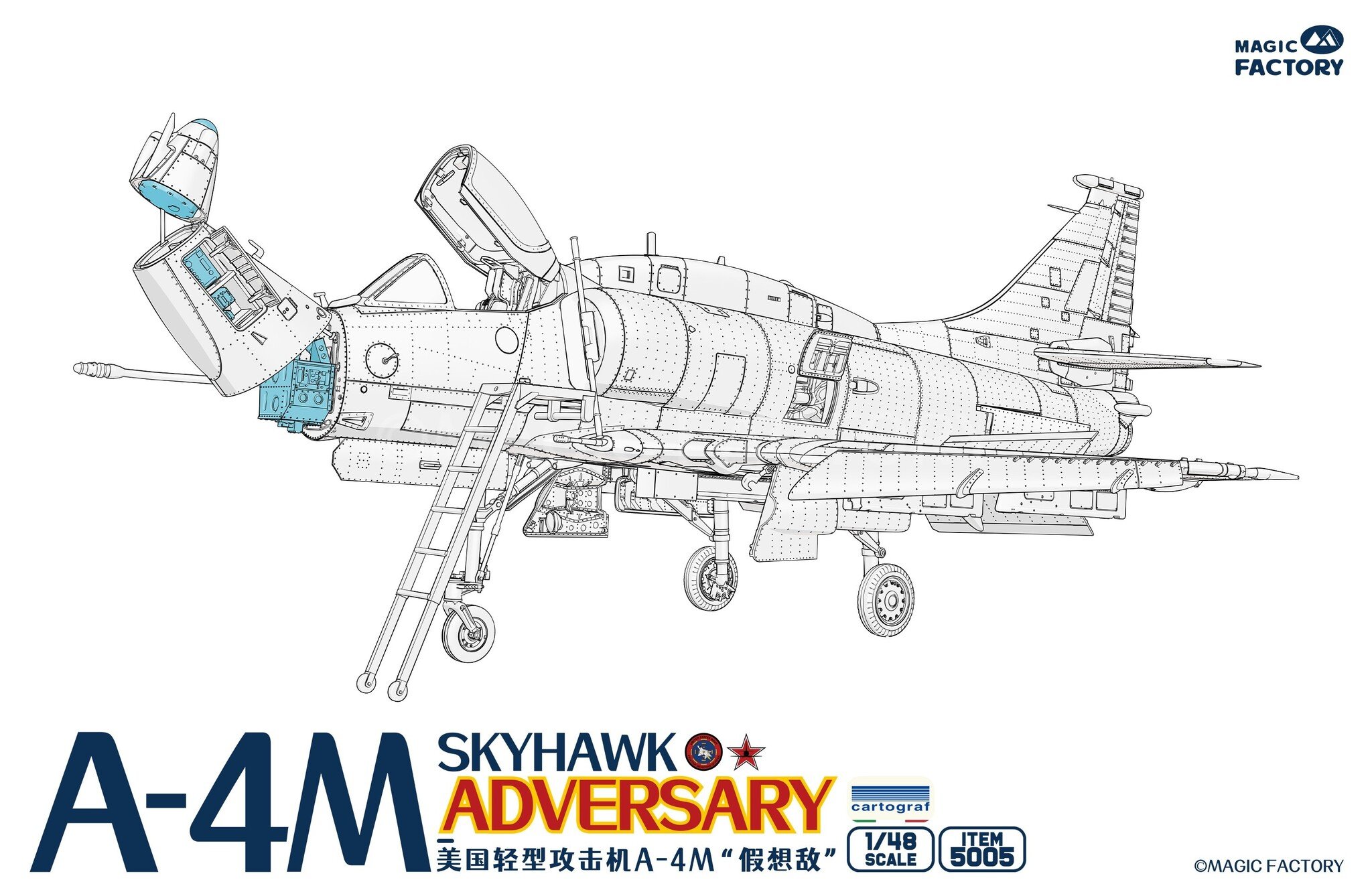
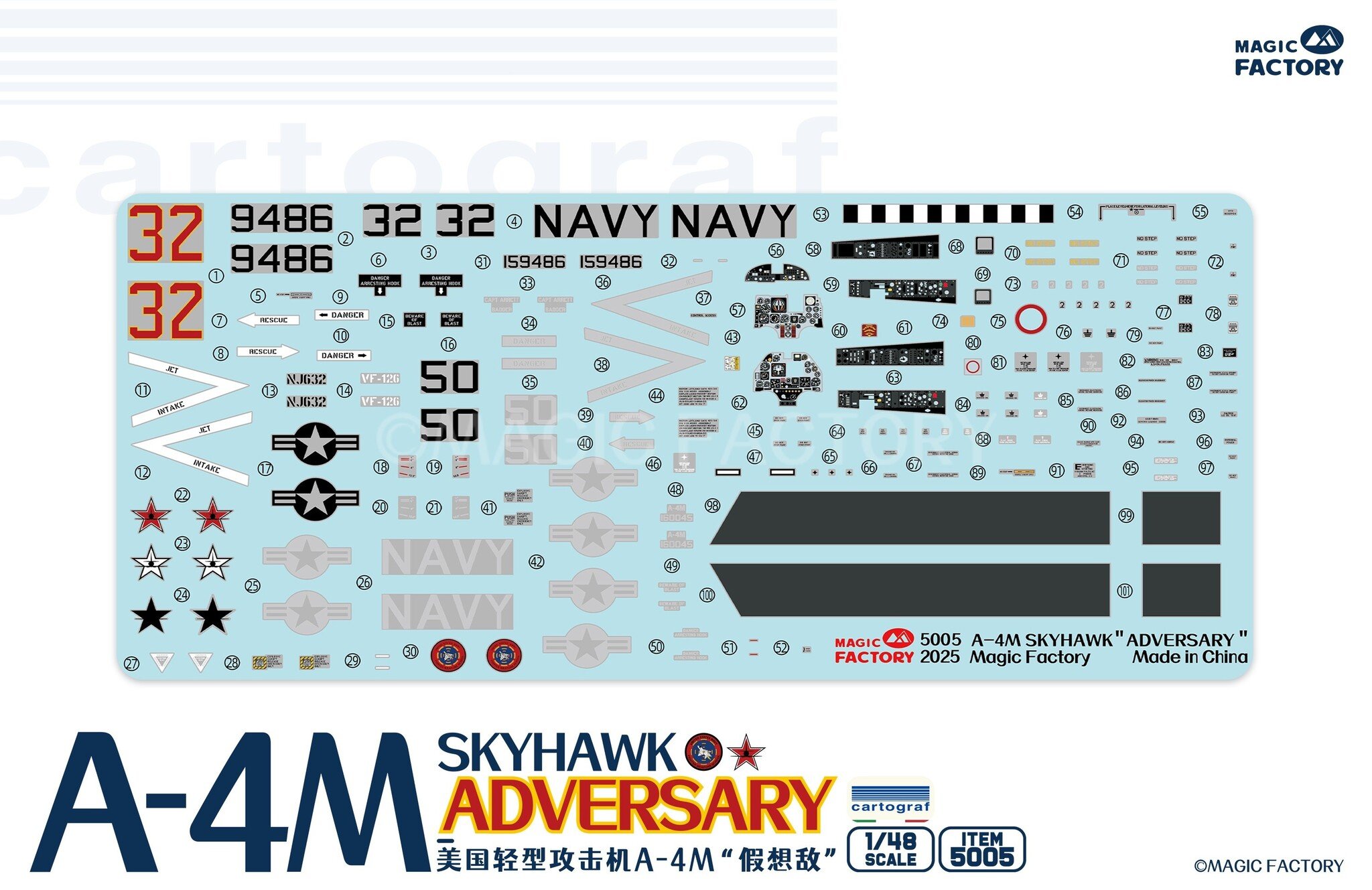
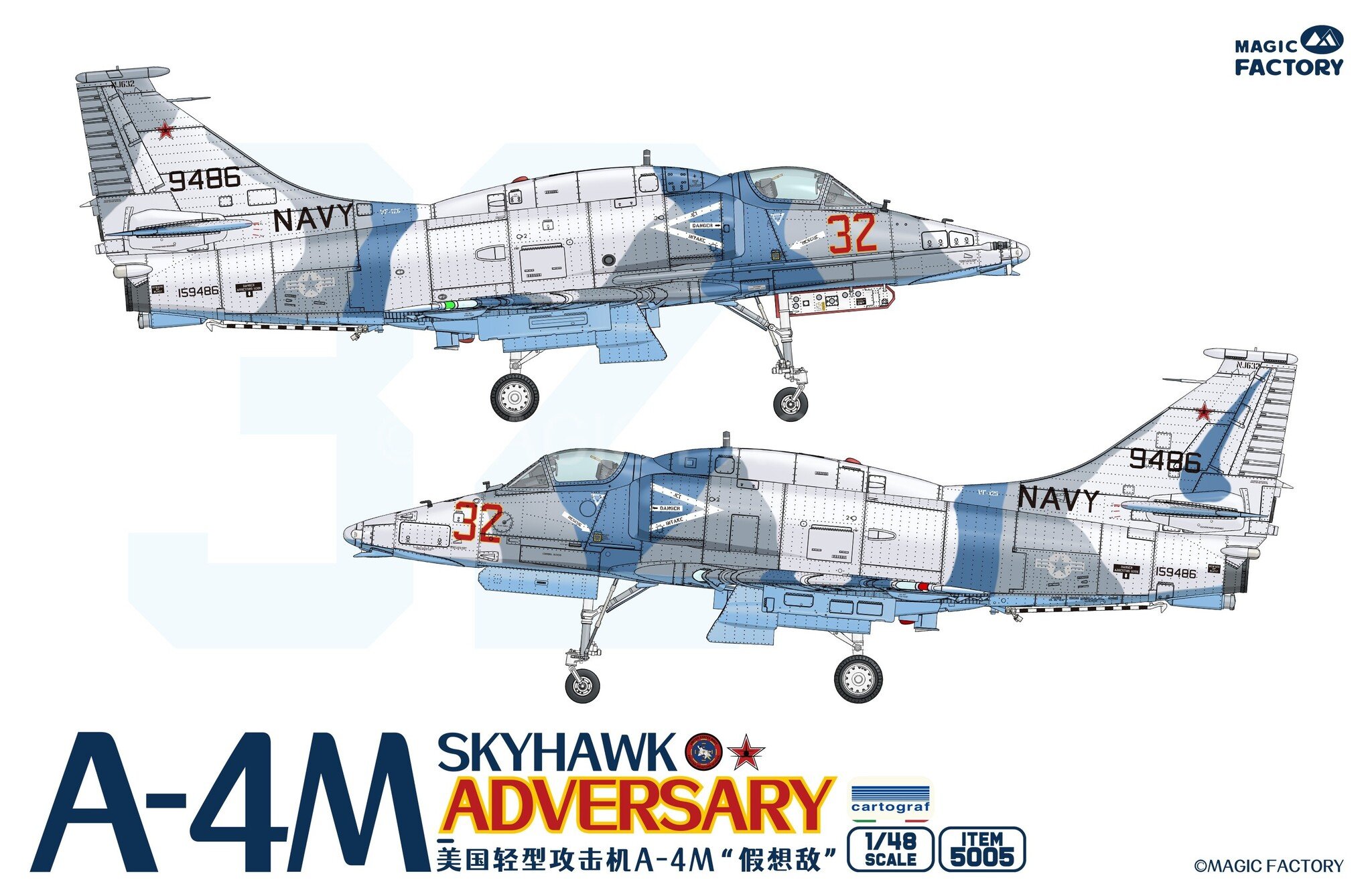
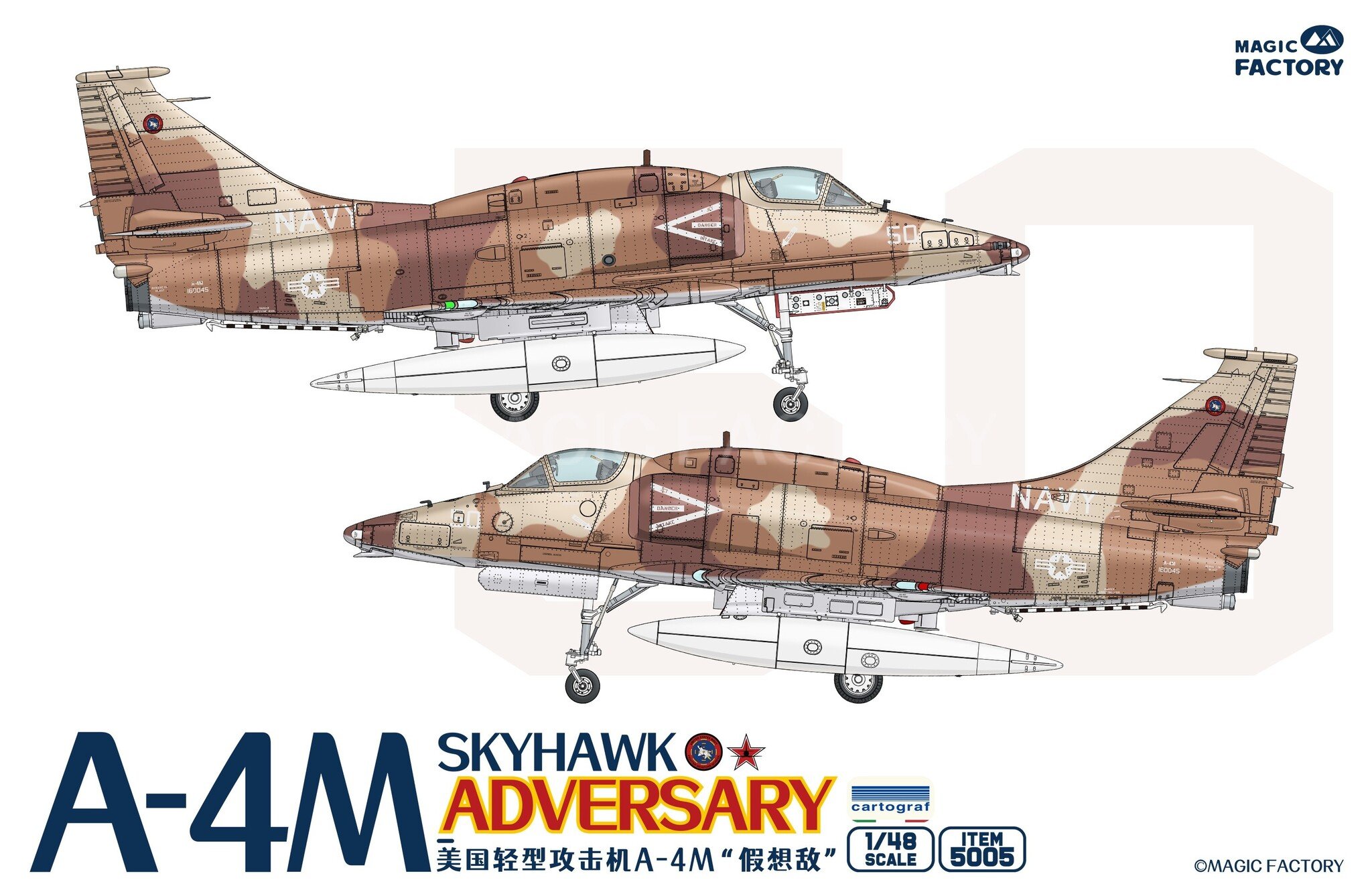
The A-4 Skyhawk's journey into the "adversary" or "aggressor" role began with the establishment of the U.S. Navy Fighter Weapons School, better known as TOPGUN, in 1969. The school's mission was to teach naval aviators how to outmaneuver and defeat enemy fighters in a new era of air combat. For this, they needed an aircraft that could mimic the flight characteristics of potential adversaries, particularly the agile Soviet-built MiG-17. The A-4 Skyhawk, with its tight turning radius and small size, proved to be an ideal stand-in. The A-4, along with other Skyhawk variants, became a staple of various adversary squadrons in the Navy and Marine Corps. Squadrons like VF-43, VF-45, VF-126, and VF-127 utilized the Skyhawk to provide realistic combat training. These units adopted a variety of striking camouflage schemes, often emulating the paint schemes of potential enemy aircraft, to further enhance the training experience. As an adversary, the A-4 was more than a handful in a furball for "Crusader" and "Phantom" pilots. Because of its air-to-air prowess, the A-4 provided most fighter pilots with the experience necessary to prepare them for actual combat. The A-4 continued to be the perfect airplane to simulate "Bandits," even against the newest U.S. Navy fighter, the F-14 Tomcat. In a DACT (Dissimilar Air Combat Training) sortie against the mighty Tomcat, the A-4 was perfect for playing the part of a small, highly maneuverable fighter—hard to acquire and easy to lose track of during an engagement. In 1987, some A-4Ms were stripped of all armor, nonessential avionics, and other equipment, reducing the empty weight by approximately 1,500 pounds. These aircraft traveled as required to provide adversary DACT for Navy, Marine Corps, Air Force, and Canadian fighter pilots at various bases in the United States and Canada. The A-4M's service as an adversary aircraft extended well into the 1990s. The last U.S. Navy Skyhawks, including two-seat TA-4J models, were officially retired from their adversary role in 2003. Today, the legacy of the A-4 Skyhawk as a "red air" platform lives on. The A-4's continued agility and low operating costs have made it a popular choice for private defense contractors who provide adversary air support to military forces. These modern-day adversary Skyhawks, sometimes equipped with advanced systems like Active Electronically Scanned Array (AESA) radars, continue to challenge and train a new generation of pilots, ensuring the "little jet that could" remains a vital part of air combat training around the world.
Suchen Sie die Bestellung, die Sie widerrufen möchten
Geben Sie Ihre E-Mail-Adresse und Ihre Bestellnummer ein.
Prüfen Sie Ihren Posteingang
Wenn Ihre Angaben mit einer Bestellung übereinstimmen, erhalten Sie eine E-Mail mit einem Link, über den Sie diese betrachten und verwalten können.


